Elizabeth Farr was the oldest child of Nathan and Susan Fox Farr. She was born in 1806 in Towanda Creek, Pennsylvania, which is the same year her parents got married there. In 1807, her brother Cooper was born in Towanda Creek, but later that year the Farr family moved west, which at that time was Ohio. However, in 1810 Susan Farr shows up on the U.S. Census back in Towanda, Pennsylvania with Elizabeth age 4 and Cooper age 3. We are not sure where Nathan was at this time.
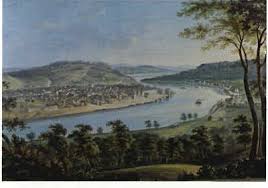
The family lived in Jefferson County, Ohio for awhile. Steubenville is the county seat. William Henry Farr was born in 1814 in Jefferson County. By the time Elizabeth was ten her family had moved to Hamilton County, Ohio. The family was living in Anderson Township, Hamilton County, Ohio which is outside of Cincinnati and right next to Clermont County, Ohio. The Little Miami and Ohio Rivers separate Anderson Township from Cincinnati even though both towns are in Hamilton County, it was easier to get to Batavia, the county seat of Clermont County, which is right next door to Anderson Township. So quite a few Farr family records have been found in Clermont County. In 1816, Susan and Nathan had their fourth child Samuel. He was born in Cincinnati, Ohio on March 7, 1816. Farr family oral history says that Nathan and Susan died of cholera, when Samuel was a little boy, possibly around 1819 or 1820. Elizabeth would have been 13 or 14 years old.
During the time the Farr’s lived in Ohio people often died from many serious diseases such as cholera, malaria, typhoid, diphtheria, tuberculosis, influenza and other devastating epidemic diseases of various kinds according to the History of Epidemics in Cincinnati by E.W. Mitchell. So it is quite possible this is what happened to Elizabeth’s parents, leaving Elizabeth and her brothers on their own.
In 1821, at the age of 15, Elizabeth married Nathan Lindsey in Clermont County, Ohio. Nathan was 19 years old. The ages of Elizabeth’s brothers when she got married were Cooper age 14, William age 7 and Samuel age 5. It is possible that Elizabeth and her siblings stayed on their parent’s farm in Anderson Township after they died. When Elizabeth married Nathan he could have moved in with them. Elizabeth and Nathan stayed in Anderson Township until 1836.
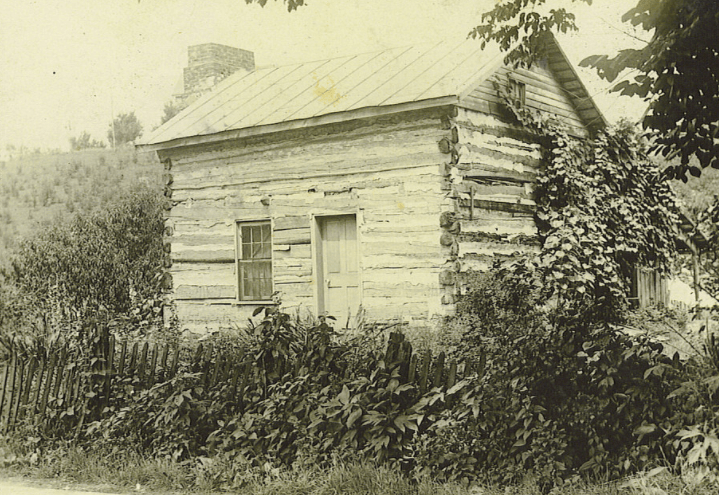
What was housing like for a pioneer family in Ohio. You could expect a drafty cold house with snow on the bed, no glass in the windows and two rooms. One room is the bedroom, the other is for all other functions, including mending the harness, sharpening and oiling your tools, spinning, and weaving, cooking and relaxing in the evening.
If you were smart, you put in a loft (heat rises). Up there you would find two beds. One bed for mom and dad and the baby, and the other bed is for everyone else. Half the heads on the pillows at the “head” of the bed and half the heads on the pillows at the “foot” of the bed. The bed will have ropes tied about every foot going across, and three or four ropes going from head to food. This is your “box spring.” Your mattress will be a piece of thick cloth (ticking) that is stuffed with straw or corn husks or something of that ilk. The featherbed (if there is one) goes on top to keep you warm. Kathy Belt, Countryside Magazine, September/October 2012.
Fifteen years into her marriage, in the year 1836, Elizabeth and Nathan talked it over and decided to moved their family to Fulton County, Illinois. They left Ohio in covered wagons along with her brother Cooper Farr’s family, the family of Solomon Lynn (Ada Lynn, the daughter of Solomon, was the wife of Cooper Farr), the family of William Rose (William’s wife Eliza Anna Lynn was a sister of Ada, and daughter of Solomon Lynn) and her brother Samuel Farr’s family. They set out on their journey in August 1836, it was a month and a half, 350 mile journey across Indiana and central Illinois to reach Fulton County. When they left Ohio Elizabeth and Nathan had five children: James, age 12; Cooper, age 10; Amanda Jane, age 6; Stephen, age 4 and Susannah, age 1. According to William Rose he left Ohio with a yoke of (two) cattle, a horse and $600 dollars, accompanied by his family and the others. They traveled six weeks on the road and camped out every night on their way to Illinois. Portrait and Biographical Album of Fulton County, Illinois, 1890.
Nathan and Elizabeth had eleven children together during their married life. The first five were born in Clermont County, Ohio and the last six were born in Fulton County, Illinois. The six children born in Fulton County are Hannah, Hezekiah, Elizabeth, Mary Ellen, Nathan Dallas and Arthusa. Nathan and Elizabeth worked hard and prospered in Fulton County. In 1850, their farm was worth $7000 dollars, compared to surrounding farms which were valued from $700 to $1500.
What was living on a farm in Fulton County like in 1845? You went to the store for only flour, coffee, and sugar, things you couldn’t grown on the farm. You would grow your own linen (hemp was preferable to flax for durability and comfort), and wool. Simple homesteading in the 1840’s meant you learned how to knit, spin and weave, and use only your own feet (or those of a horse) for transportation. You would dig your own well, do your own blacksmithing and maybe starve in the winter when you had a bad crop.
Families were large in the 1800s, a family might have 10-18 children, all born at home, and half of them would die before the age of five because of dysentery, typhoid, scarlet fever or measles. Children and parents got up with the sun to work and read by the light of the drafty fireplace at night. This describes Elizabeth’s life and that of most Americans in the early to mid 1800s. Kathy Belt, Countryside Magazine, September/October 2012.
Sadly, two of Elizabeth’s children preceded her in death. Cooper Lindsey died in 1851 and Stephen Lindsey died in 1864. Elizabeth died in 1865 in Fulton County. She was 59 years old. She left behind her husband Nathan, 9 grown children and 14 grandchildren.
 Farr's of Fulton County, Illinois
According to the “History of Fulton County” published by C. C. Chapman in 1879, it states that Cooper Farr was born in Pennsylvania in 1807 to Amos Farr and Susan Fox Farr. Cooper and Elizabeth were brother and sister. Why do you have Nathan Farr as the father? What is your source?
LikeLike