Inventor, Union cavalry soldier, and farmer Harrison L. Pittman was born on Columbus Day, October 12th, 1846 in Industry, Illinois, a small farming community in western Illinois. Harrison Pittman was the great-grandfather of Conrad Landis Farr who was also born in Industry 82 years later. When Harrison Pittman was born his father, William, was 41 and his mother, Nancy Wyatt Pittman, was 39 years old, he was one of 13 children born to his parents.
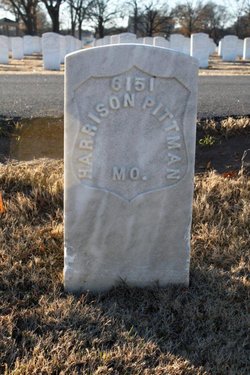
Harrison married Mahala Emma Rose on March 21, 1867, in McDonough County, Illinois two years after the Civil War had ended. The Farr and Rose families had know each other in Ohio before they moved to Fulton County in the late 1830s, in fact they traveled together as part of a group of settlers from Ohio to Illinois. Harrison and Emma had nine children together over a 24 year period. Emma died in 1907. Sometime after her death Harrison moved to Little Rock, Arkansas to live with his daughter Eva and her husband Frank Vandenberg. Harrison appears on the 1910 U.S. Census as living with the Vandenberg’s. Sadly, his daughter Eva died on January 5, 1912. Harrison continued to live with his son-in-law, but he died one year later on April 20, 1913, in Little Rock, Arkansas. He was 66 years old and was buried in Little Rock with a tombstone that honored his Civil War service.
Military Service during the Civil War
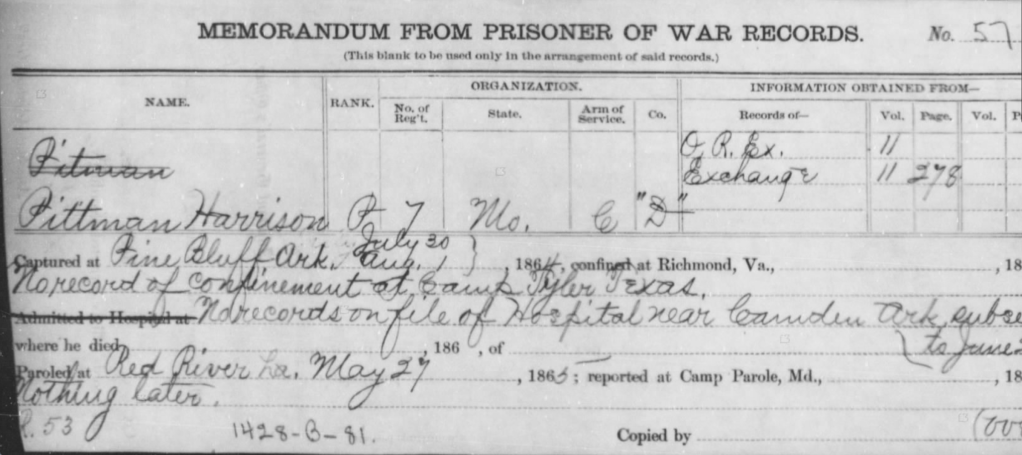
Harrison Pittman enlisted in the 7th Missouri Cavalry, Company D as a private, which was organized February 20, 1862 by consolidating several other cavalry companies. He was 16 years old. Harrison was nineteen years old when he was released from a Confederate prisoner of war camp in Louisiana at the end of the war in 1865. He was captured in 1864.

The 7th Missouri Cavalry in Action
In May 1862, the 7th Missouri Cavalry began operations in Miami and Waverly, Missouri. On June 4-10, Companies H and I were sent on a scout to Waverly, Miami, Franklin, and Pink Hill.
On June 11, Captain Hawk of Company I led his column to a point five miles from Waverly, in the direction of Miami. There, his column was fired upon by a party of nine Confederate soldiers in ambush. The Missourians thought these Confederates were part of a larger force, and returned fire.
Two of the rebels were killed and one was wounded. Of Captain Hawk’s company, he was severely wounded in the right arm and First Sergeant Samuel Wood was killed. The Rebels escaped capture, but left nine horses behind.
This skirmish is a good example of the kind of fighting that the 7th Missouri Cavalry saw on a regular basis during the Civil War. The regiment was often tasked with scouting and patrolling enemy territory, and they were frequently engaged in skirmishes with Confederate forces.
The 7th Missouri Cavalry in Pursuit of Quantrill’s Raiders
On June 11, 1862, a detachment of soldiers from the 7th Missouri Cavalry was sent to Pink Hill in search of Quantrill’s Raiders, a group of pro-Confederate partisan guerrillas. The detachment arrived to find that Quantrill and his men had already left the area.
On June 23rd, Company B of the 7th Missouri Cavalry was sent to Haytown. Between June 28th and July 1st, Companies B, D, F, and K of the regiment participated in operations around Sibley and Pink Hill. Harrison Pittman was among the soldiers who participated in these operations.
Major Bredett and Lieutenant Chandler arrived in the Pink Hill area to find that Quantrill and his men were gone. The 7th Missouri Cavalry then went to Napoleon, Missouri, where they turned over 28 prisoners, one contraband horse, a quantity of guns, and sundry articles of stolen property to Captain Rockwell, the Provost-Marshal.
The 7th Missouri Cavalry continued to see action throughout the summer and fall of 1862. On July 9th, they engaged Confederate forces at Lotspeach Farm, near Wadesburg. On July 9-11th, they participated in expeditions in Cass County. On July 23rd, they engaged Confederate forces on the Blackwater, near Columbus. On August 16th, they sent five companies to Lone Jack. And on October 4th, they participated in the Occupation of Newtonia.
The 7th Missouri Cavalry played an important role in the Union effort to suppress Confederate guerrilla activity in Missouri. The regiment’s soldiers were brave and dedicated, and they made significant contributions to the Union victory in the state.
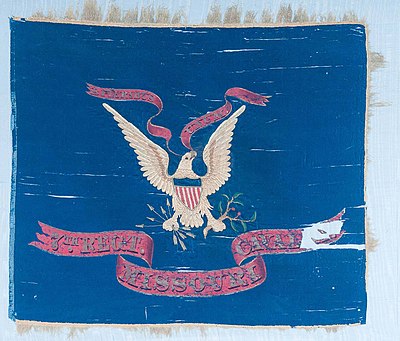
Flag of the 7th Missouri Cavalry Union to which Harrison Pittman belonged to Company D
1862 and 1863 – The 7th Missouri Cavalry fought in the following battles and campaigns:
- December 1862: Battle of Prairie Grove and Van Buren
- December 1862-January 1863: Expedition over Boston Mountains
- February-May 1863: Operations in Missouri
- July 1863: Battle of Brownsville
- August-September 1863: Union General Steele’s Expedition against Little Rock
- August 1863: Battles of Grand Prairie and Brownsville
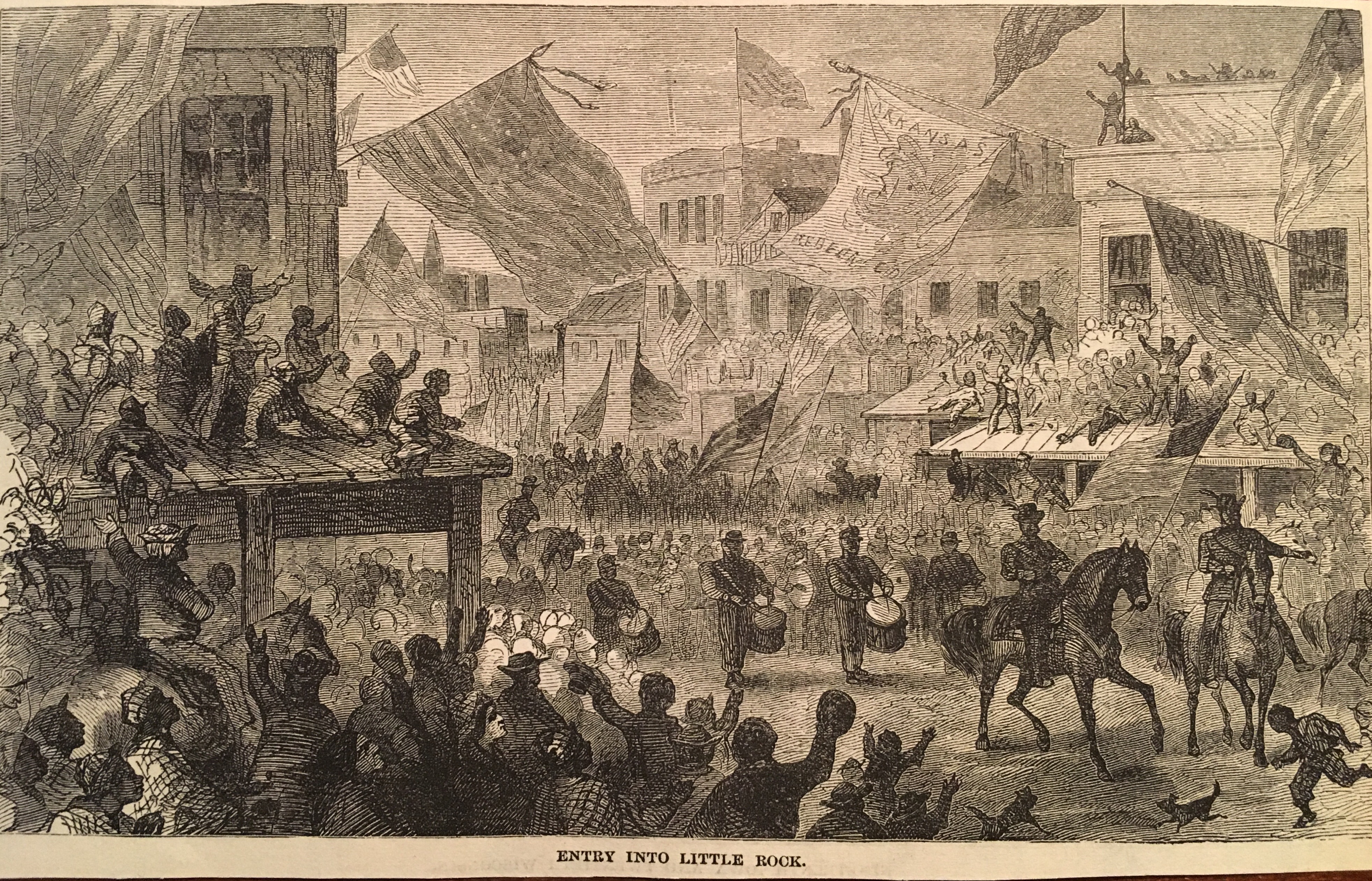
the capture of Little Rock from the Confederates.
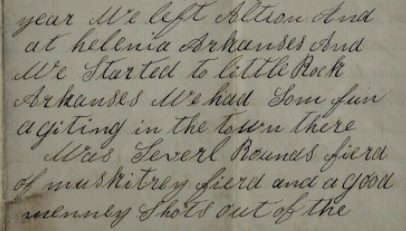
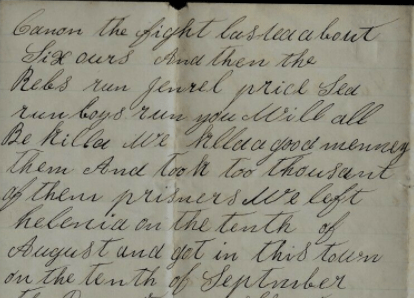
Summary of the 7th Missouri Cavalry Regiment’s Civil War Service from 1863 to 1865
The 7th Missouri Cavalry Regiment was organized in August 1862 and served in the Trans-Mississippi Department throughout the Civil War. The regiment saw action in a number of battles and skirmishes, including:
- Capture of Little Rock, Arkansas – September 10, 1863
- Pursuit of Confederate General Price – September 11-14, 1863
- Expedition from Benton to Mount Ida – November 10-18, 1863
- Reconnaissance from Little Rock – December 5-13, 1863
- Princeton, Arkansas – December 8, 1863
- Branchville, Arkansas – January 17, 1864
- Monticello, Arkansas – March 18, 1864
- General Steele’s Expedition to Camden – March 23-May 3, 1864
- Expedition from Pine Bluff to Mount Elba and Longview – March 27-31, 1864
- Mount Elba, Arkansas – March 30, 1864
- Mark’s Mills, Arkansas – April 25, 1864
- Pine Bluff, Arkansas – September 9-11, 1864
- Monticello, Arkansas – September 10, 1864
- Brewer’s Lane, Arkansas – September 11, 1864
- Reconnaissance from Little Rock toward Monticello and Mount Elba – October 4-11, 1864
- Pine Bluff, Arkansas – January 7-9, 1865
The regiment was consolidated with the 1st Missouri Cavalry Regiment on February 22, 1865. During the war, the regiment lost 4 officers and 55 enlisted men killed and mortally wounded, and 4 officers and 228 enlisted men by disease, for a total of 291 casualties.
The 7th Missouri Cavalry Regiment was a hard-fighting and well-respected unit that served with distinction in the Trans-Mississippi Department during the Civil War. The regiment’s soldiers made significant contributions to the Union victory in the region.
Capture of Harrison Pittman by Confederate soldiers
Private Harrison Pittman had been in the 7th Missouri Cavalry for two years, he had seen more than his share of death and destruction. In the summer of 1864, the Civil War was raging in Arkansas and across the country. Pittman’s regiment was part of the Union Army, and they were constantly on the move, fighting against Confederate forces.
Stationed in Jefferson County, Arkansas in the summer of 1864, around July 30th Pittman’s regiment the 7th Missouri was scouting when they were ambushed by Confederate forces. He was quickly surrounded by Confederate soldiers. Harrison realized that there was no escape, he was captured. Pittman and the other Union soldiers were taken prisoner by the Confederates.
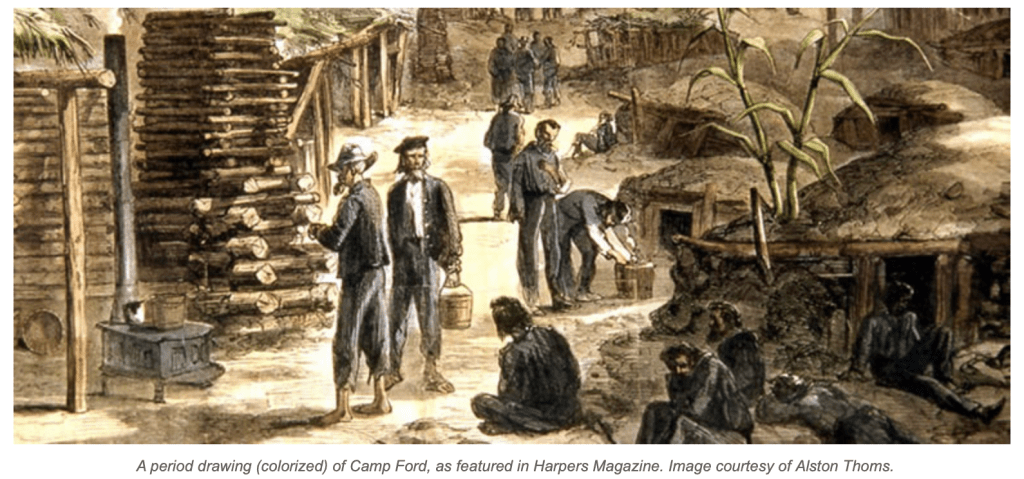
They were marched to a Confederate prisoner camp in Tyler, Texas called Camp Ford, where they were held in captivity for the remainder of the war. Camp Ford was the largest Confederate run POW camp west of the Mississippi River, at one point housing over 5600 Union prisoners. The conditions at the camp were poor. The prisoners were given only enough food to survive, and they slept on the ground, or in dug-out shelters and cabins they built themselves. Despite the harsh conditions, Harrison and the other prisoners refused to give up hope. They knew that one day, the Union Army would come and rescue them, but instead ten months later the war came to an end. Harrison Pittman was released by the Confederates on May 7, 1865 in Red River, Louisiana.
Harrison Pittman Invents a Refrigerator
After the war, Pittman returned to his home in Illinois. He married and had children, and he lived a long and successful life. He never forgot his time in the 7th Missouri Cavalry, and he was always proud to be a Union veteran.
Harrison Pittman was an intelligent man, with a mind that was always busy dreaming up different ideas. On September 19, 1893, Harrison received a U.S. Patent for a new and improved refrigerator from the U.S. Patent Office in Washington, D.C.
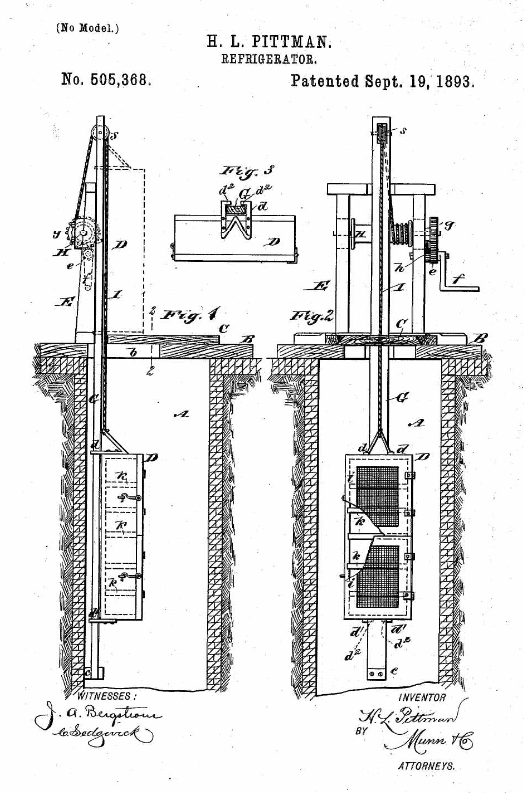
Pittman Received U.S. Patent – 1893
Patent for new and improved refrigerator.
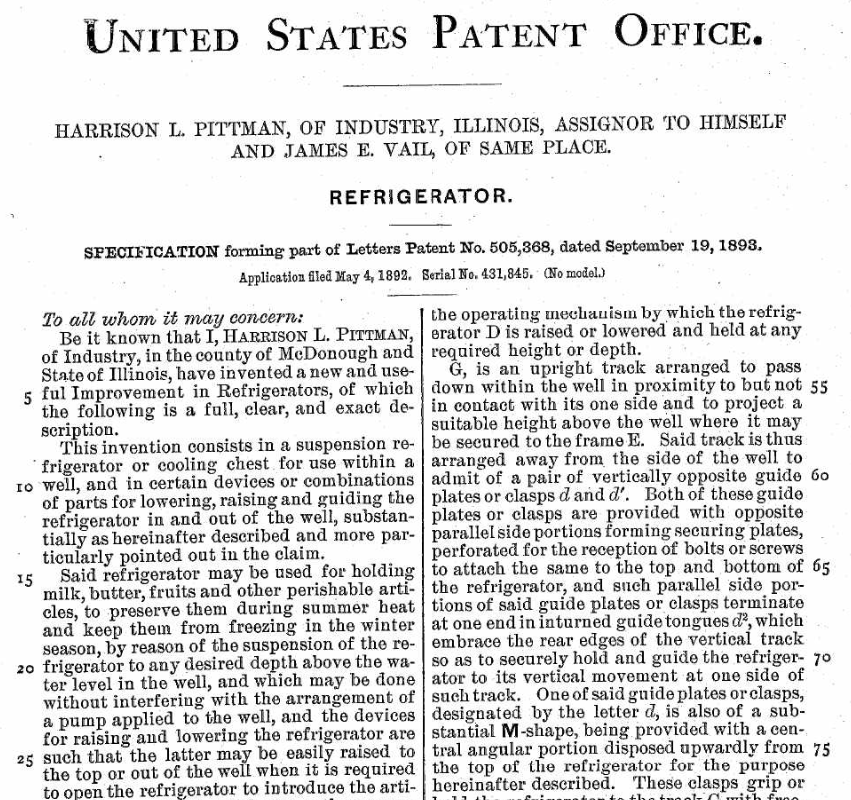
Sept. 19, 1893 • Industry, Illinois
Harrison L. Pittman died on April 20, 1913 in Little Rock, Arkansas at his daughter Eve’s home. He was buried at the Little Rock National Cemetery. Harrison L. Pittman was a man of many accomplishments. He was a farmer, a Civil War soldier, an inventor, and a father. He was also a member of a pioneer family that helped to settle the American West. Harrison’s legacy lives on through his descendants and the many contributions he made to his community.
 Farr's of Fulton County, Illinois